

Why Heavy Plate Jobs Go Sideways — and How to Keep Yours From Doing the Same
Short answer: Heavy plate jobs go wrong most often because the cutting and forming steps get split between different shops. When the cutter doesn’t know how the plate has to bend, and the former is stuck working with cuts that didn’t account for material movement, the part fights you the whole way through. Keeping plasma cutting and forming under one roof — with a team that handles thick material every day — is the single biggest thing that changes the outcome.
What Makes Heavy Plate Different From Sheet or Lighter Plate?
Thick material doesn’t behave like thinner stock. It moves more during cutting because the heat input is bigger. It springs back differently in a press brake. It holds residual stress from the mill that gets released the moment you put a torch to it. And the heavier it gets, the less forgiving every upstream decision becomes.
A 1/4″ plate will tolerate a sloppy cut. A 1-1/2″ plate will not. By the time the part hits forming, anything you missed at the cutting step is now baked in — and the only way to fix it is rework, scrap, or a fight at fit-up.
Why Do Heavy Plate Jobs Go Wrong So Often?
Three patterns show up again and again:
- The job gets cut at one shop and formed at another. The cutter has no idea how the part is going to bend. The former inherits whatever shows up on the truck. Nobody owns the outcome.
- Bend allowances aren’t planned before cutting. If the flat pattern doesn’t account for how heavy plate stretches and compresses through a brake, the formed part will be off — sometimes by a little, sometimes by enough to scrap.
- Tolerances that work on lighter material don’t hold at heavier thicknesses. Springback is bigger. Heat distortion is bigger. Edge condition matters more. A tolerance stack that was fine at 3/8″ can fall apart at 1″.
By the time these problems show up, the parts are already on your shop floor — and you’re the one absorbing the cost.
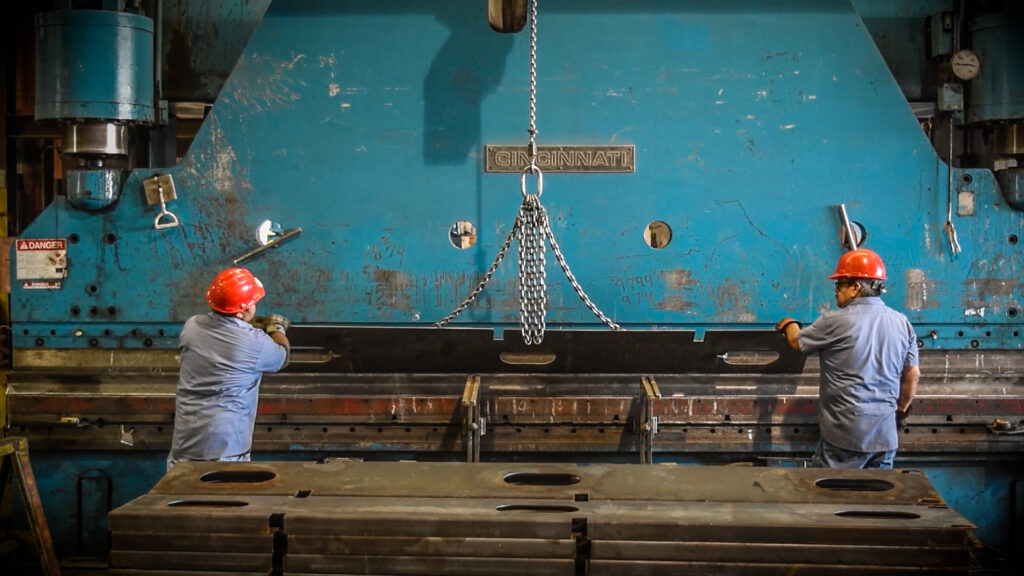
How Should Heavy Plate Cutting and Forming Be Coordinated?
They shouldn’t live in separate worlds. The cutter should already know the bend lines, the bend radius, and the direction the grain is running before the torch ever fires. The former should already know the cut quality, the edge condition, and the heat-affected zone they’re going to work with.
When both steps happen in the same facility, that coordination is the default — not something you have to engineer across two suppliers, two schedules, and two quality systems.
In practice, that looks like:
- Cuts made with the bend in mind, so flats come out sized for the formed part
- Cut quality matched to the forming process, so edges don’t crack or pull
- Parts moving from table to brake without leaving the building
- One team accountable for the part that lands on your floor
What Thicknesses Can Heavy Plate Actually Be Cut and Formed At?
Capability depends on the shop, but here’s what we run at Willbanks Metals in Fort Worth: plasma cutting up to 2″ thick, oxy-flame cutting up to 4″ thick, forming up to 24′ long with specialty dies and punches, and plate rolling on cylinders, cones, and shells up to 4″ thick and 120″ wide. We stock mill plate up to 5″ thick across A36, A572, A514, AR, A588-50, and other common grades — so the same shop sourcing the material is the one cutting and forming it.
That single-source setup is the part most OEMs and structural fabricators tell us makes the biggest difference. Instead of chasing material at one supplier, cutting at another, and forming at a third, the whole job runs through one schedule.
What Should You Send a Heavy Plate Supplier Up Front?
The earlier the conversation, the smoother the job. If you’ve got prints — even rough ones — send them. A good supplier will look for things that should get flagged before steel gets ordered:
- Bend lines that conflict with hole locations
- Tolerances that are tighter than the thickness can reasonably hold
- Grain direction relative to bend axis
- Edge prep needed for downstream welding
- Whether forming sequence is going to drive cut layout
Catching those at the print stage costs nothing. Catching them after the plate is cut costs a lot.
Heavy Plate FAQ
What’s the maximum plate thickness most service centers can plasma cut? Around 2″ is standard for high-definition plasma. Beyond that, oxy-fuel handles up to 4″ or more. Choice between the two depends on the cut quality you need and the part geometry.
Why do tolerances loosen on thicker plate? Heat input is greater, the heat-affected zone is wider, and residual stress release during cutting causes more movement. Thicker plate also springs back more during forming, which makes precise bend angles harder to repeat. Designing with realistic tolerances for the thickness — instead of carrying sheet-metal tolerances onto heavy plate — is the fix.
Is it cheaper to cut and form heavy plate at separate shops? Sometimes the line-item cost looks lower. The total cost almost never is. Rework, fit-up issues, and missed schedules from poor coordination usually erase any savings — and the time you spend managing two suppliers is its own cost.
What industries use heavy plate fabrication most? Structural steel construction, transportation and trailer manufacturing, energy (oil, gas, wind, solar), heavy equipment, and tank and pressure vessel work are the big ones. Each has its own tolerance, certification, and traceability needs, which is another reason early conversations with the supplier matter.
Got a Heavy Plate Job Coming Up?
If you’ve got prints you’re working through, send them over. We’ll take a look and help you think through the best way to run it — before steel gets ordered, before cuts get made, before something has to get fixed on your floor.